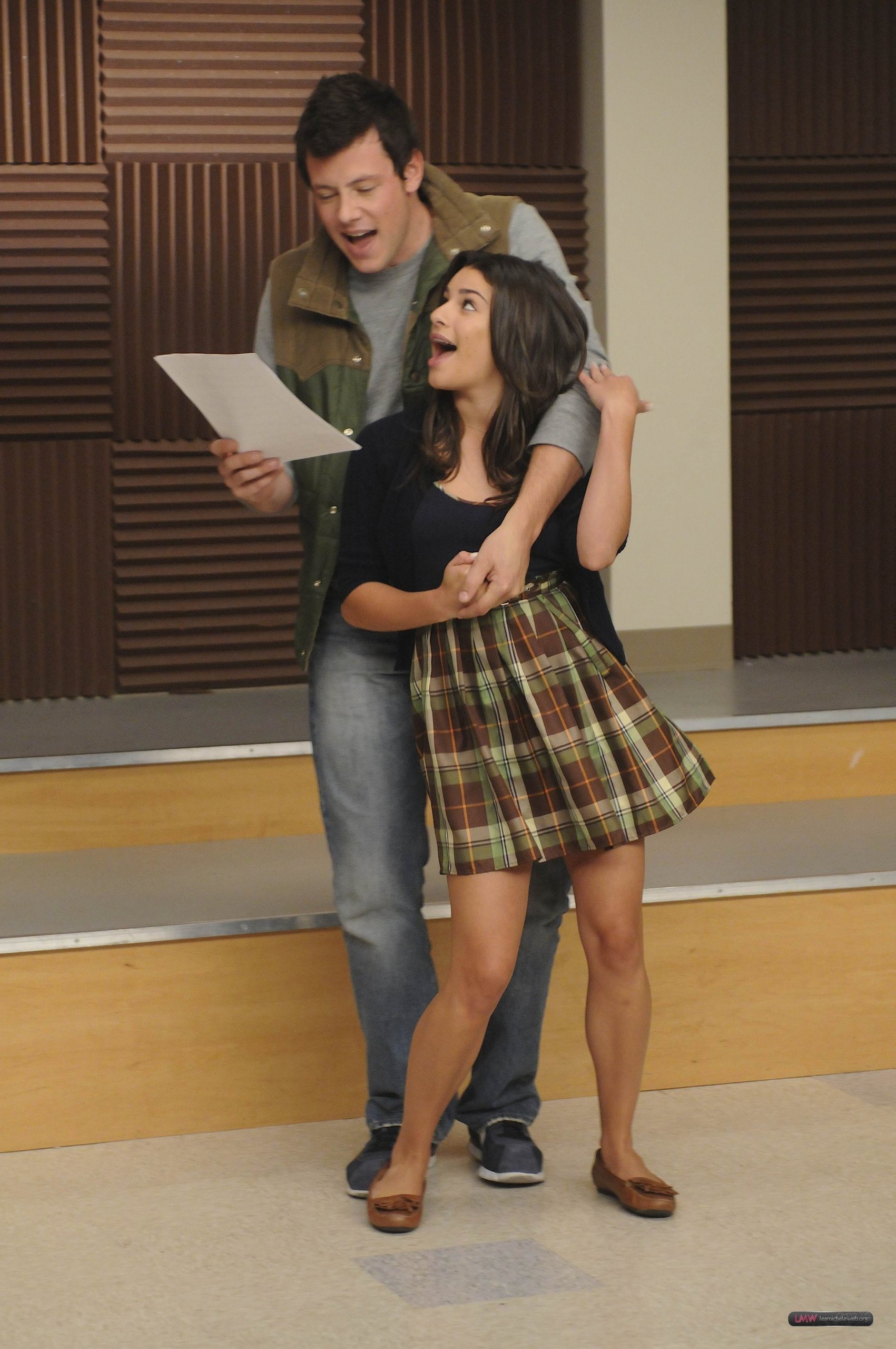
In my second week taking acting at Cheshire Academy, I have learned many tools that will help improve my acting and I can not wait to learn more throughout the class. We have mainly covered monologues and that on it's own has improved my confidence for speaking in front of others and being confident in myself when it comes to playing a character. I have done a monologue on the serious topic of bringing guns to school due to fear of bullies and tormentors. We have also covered what makes a good performance when it comes to acting out a monologue. Skills such as projecting, diction, emphasis, and stage presence are all important qualities.
Projecting is the act of making one’s voice louder without yelling at the top of their lungs. Projection is not always easy for me, but is a very important tool when it comes to acting. If someone is performing a monologue and no one can hear them, then that means that they are not projecting. True actors and actresses such as Lea Michele and Idina Menzel have learned to project especially from when they were on Broadway and they needed to make sure that the people in the back row could hear them just as well as those in the front.
Diction is also an important skill. If your pronunciation of the word is incorrect then no one will know what you are saying or trying to get across. An element that would fall under the category of diction would be, pronouncing t’s at the end of words such as cat, hat, hurt, etc. Making sure you pronounce each and every letter that is supposed to be heard in the word. Emphasis is when you give a special feeling to a word. If you have a monologue that you need to perform, then speaking monotonously and as though there was no feeling or effort put into it is not the way to go. Making sure that if there are contrasting words, that you make it obvious they are contrasting would be an example.
Stage presence might be number one on my list of most important elements to acting. Stage presence is making sure you look in character as well as sound in character. If you are a character who is delivering a serious monologue, then you don’t want to be swaying around while you are trying to come across as serious. Making sure your hands aren’t crossed in front of you when they shouldn’t be and making sure your back is not to the audience when it should not be are both examples of stage presence.
These key ideas I’ve learned this week have made an impact on me because each key tool is going to stick with me throughout my acting career. These also will help me with public speaking as well as performing a song or an instrumental piece.
In my second week taking acting at Cheshire Academy, I have learned many tools that will help improve my acting and I can not wait to learn more throughout the class. We have mainly covered monologues and that on it's own has improved my confidence for speaking in front of others and being confident in myself when it comes to playing a character. I have done a monologue on the serious topic of bringing guns to school due to fear of bullies and tormentors. We have also covered what makes a good performance when it comes to acting out a monologue. Skills such as projecting, diction, emphasis, and stage presence are all important qualities.
Projecting is the act of making one’s voice louder without yelling at the top of their lungs. Projection is not always easy for me, but is a very important tool when it comes to acting. If someone is performing a monologue and no one can hear them, then that means that they are not projecting. True actors and actresses such as Lea Michele and Idina Menzel have learned to project especially from when they were on Broadway and they needed to make sure that the people in the back row could hear them just as well as those in the front.
Diction is also an important skill. If your pronunciation of the word is incorrect then no one will know what you are saying or trying to get across. An element that would fall under the category of diction would be, pronouncing t’s at the end of words such as cat, hat, hurt, etc. Making sure you pronounce each and every letter that is supposed to be heard in the word. Emphasis is when you give a special feeling to a word. If you have a monologue that you need to perform, then speaking monotonously and as though there was no feeling or effort put into it is not the way to go. Making sure that if there are contrasting words, that you make it obvious they are contrasting would be an example.
Stage presence might be number one on my list of most important elements to acting. Stage presence is making sure you look in character as well as sound in character. If you are a character who is delivering a serious monologue, then you don’t want to be swaying around while you are trying to come across as serious. Making sure your hands aren’t crossed in front of you when they shouldn’t be and making sure your back is not to the audience when it should not be are both examples of stage presence.
These key ideas I’ve learned this week have made an impact on me because each key tool is going to stick with me throughout my acting career. These also will help me with public speaking as well as performing a song or an instrumental piece.
In my second week taking acting at Cheshire Academy, I have learned many tools that will help improve my acting and I can not wait to learn more throughout the class. We have mainly covered monologues and that on it's own has improved my confidence for speaking in front of others and being confident in myself when it comes to playing a character. I have done a monologue on the serious topic of bringing guns to school due to fear of bullies and tormentors. We have also covered what makes a good performance when it comes to acting out a monologue. Skills such as projecting, diction, emphasis, and stage presence are all important qualities.
Projecting is the act of making one’s voice louder without yelling at the top of their lungs. Projection is not always easy for me, but is a very important tool when it comes to acting. If someone is performing a monologue and no one can hear them, then that means that they are not projecting. True actors and actresses such as Lea Michele and Idina Menzel have learned to project especially from when they were on Broadway and they needed to make sure that the people in the back row could hear them just as well as those in the front.
Diction is also an important skill. If your pronunciation of the word is incorrect then no one will know what you are saying or trying to get across. An element that would fall under the category of diction would be, pronouncing t’s at the end of words such as cat, hat, hurt, etc. Making sure you pronounce each and every letter that is supposed to be heard in the word. Emphasis is when you give a special feeling to a word. If you have a monologue that you need to perform, then speaking monotonously and as though there was no feeling or effort put into it is not the way to go. Making sure that if there are contrasting words, that you make it obvious they are contrasting would be an example.
Stage presence might be number one on my list of most important elements to acting. Stage presence is making sure you look in character as well as sound in character. If you are a character who is delivering a serious monologue, then you don’t want to be swaying around while you are trying to come across as serious. Making sure your hands aren’t crossed in front of you when they shouldn’t be and making sure your back is not to the audience when it should not be are both examples of stage presence.
These key ideas I’ve learned this week have made an impact on me because each key tool is going to stick with me throughout my acting career. These also will help me with public speaking as well as performing a song or an instrumental piece.